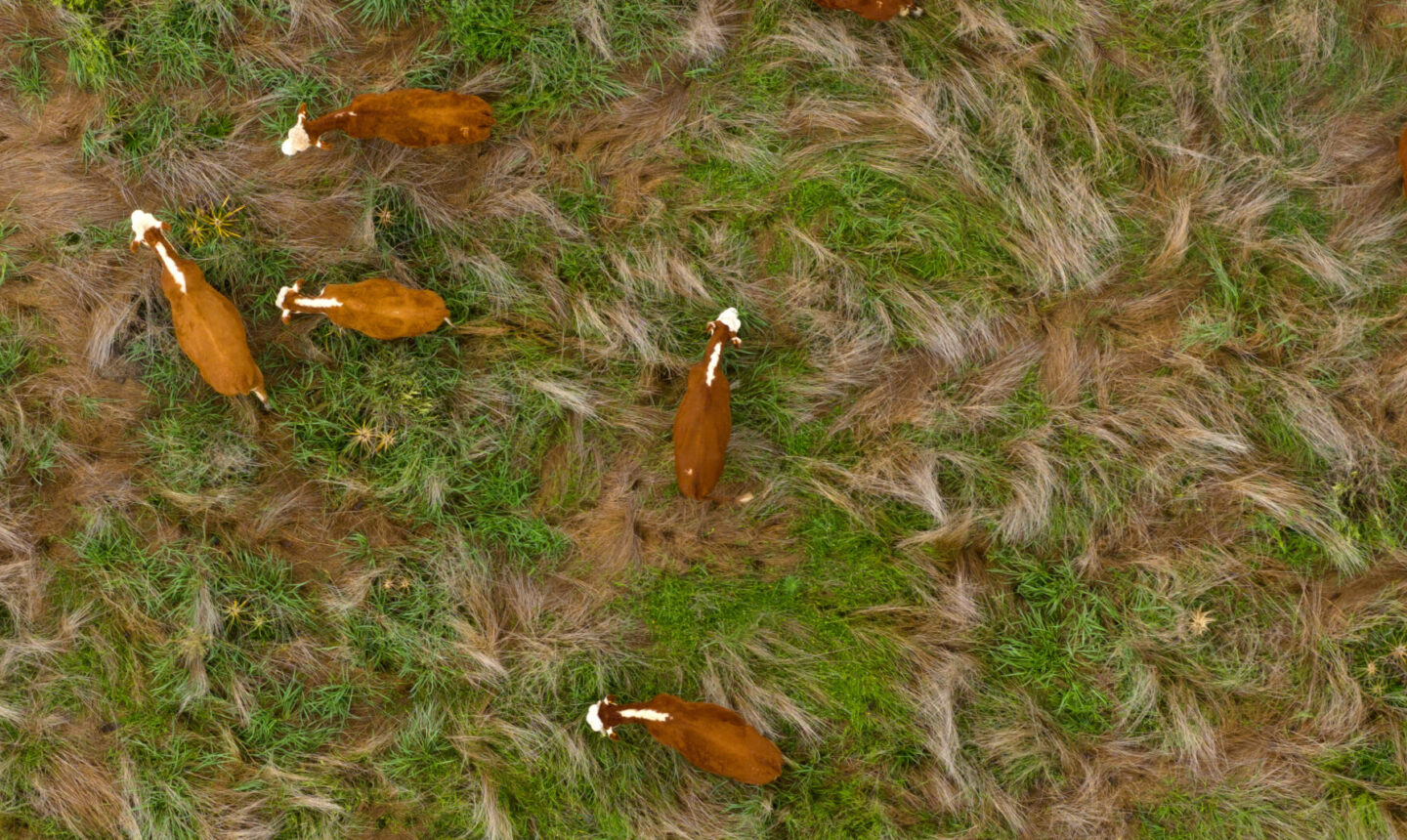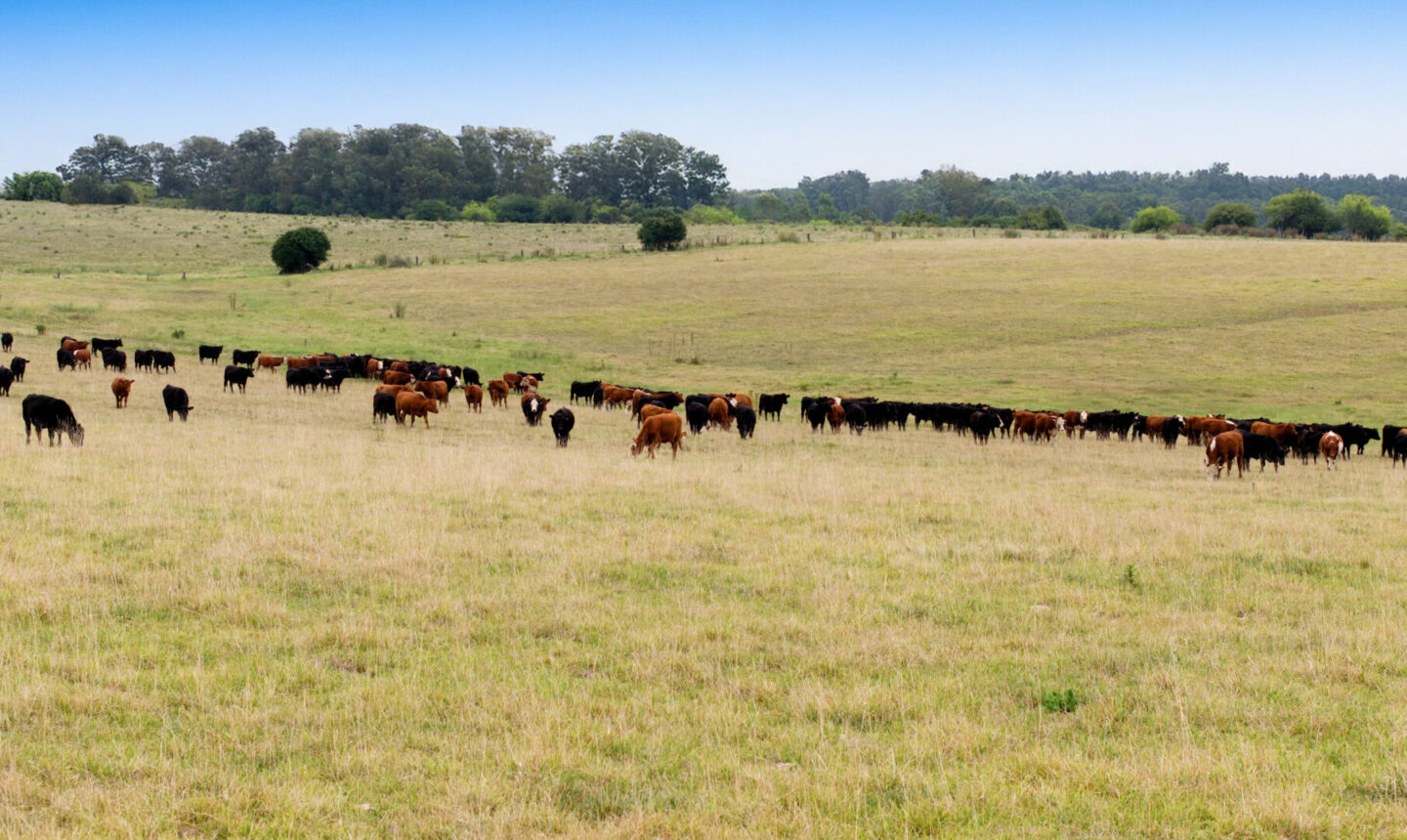
Rotational grazing is better for the planet than continuous open grazing. While conventional open grazing promotes very little if any carbon storage, rotational grazing enables the soil to remove up to 4 tonnes of carbon per hectare every year. It also results in improved soil health and water-holding capacity, and increased biodiversity.
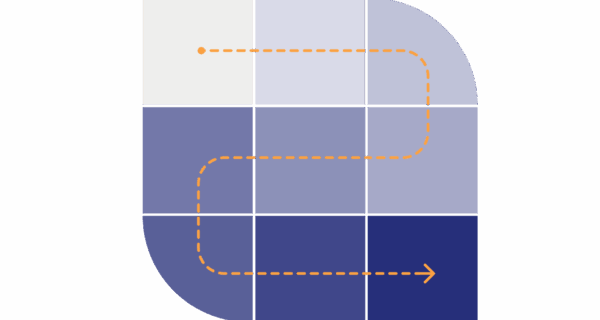
Also known as cell grazing, strip grazing, or mob grazing, rotational grazing is a farming practice that involves rotating a group of livestock into small areas for short periods of time. The livestock are then moved every 1–3 days, giving each pasture area a long rest period, which can vary from 30–200 days depending on the time of year and grass growth rate. Allowing the pasture to recover enables the soil to store significant amounts of carbon, by increasing root biomass and soil organic matter.
While conventional open grazing promotes very little if any carbon storage, rotational grazing enables the soil to remove up to 4 tonnes of carbon per hectare every year. It also results in improved soil health and water-holding capacity, and increased biodiversity. The carbon sequestration helps to reduce the beef industry’s emissions, which is well-acknowledged to be a high-emitting sector. CMC is accelerating the proliferation of rotational grazing across Uruguay by supporting ranchers across the country to convert their operations.
Read more
When you switch to rotational grazing with CMC, you’re not just helping the planet — you’re investing in the long-term success of your farm.
Find out more